
WE BELIEVE IN AN ACTIVE LONDON.
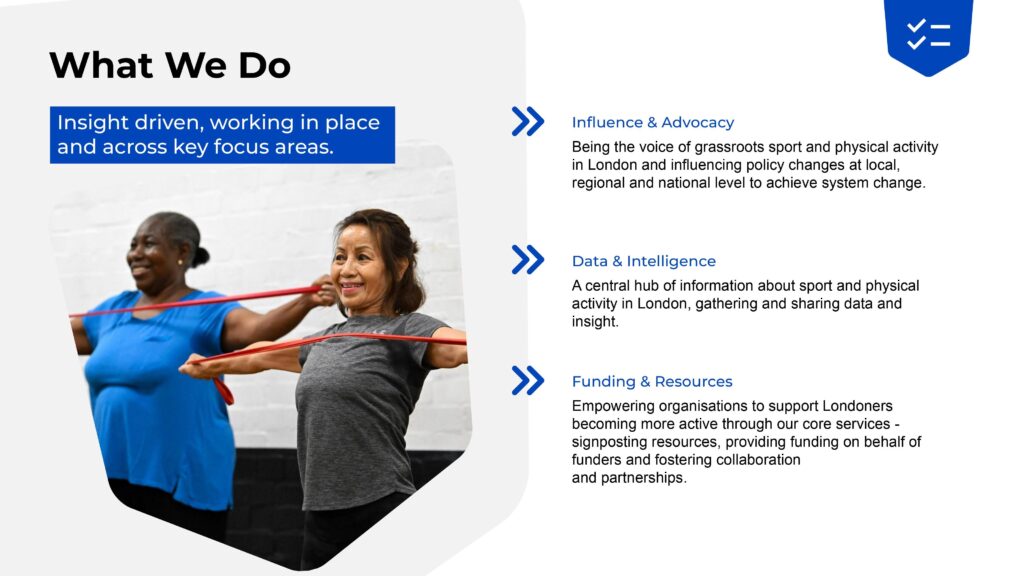
What We Do
HOW WE DO IT
Influence, Galvanise & Empower
In order to tackle inequalities and improve health and wellbeing we:
- Influence policies and systems.
- Galvanise governments, corporate, elite sport and others to get behind a collective mission.
- Empower local authorities, grassroots sports clubs and other delivery organisations to create.
In our new 3-year strategy, we will be ambitious in our approach, fostering inclusivity, and inspiring change by influencing and working with like-minded organisations to break the link between inactivity and inequality, ensuring more equitable access to sport and physical activity for the most deprived communities.
Insight Driven
In our new 3-year strategy, we will be ambitious in our approach, fostering inclusivity, and inspiring change by influencing and working with like-minded organisations to break the link between inactivity and inequality, ensuring more equitable access to sport and physical activity for the most deprived communities.
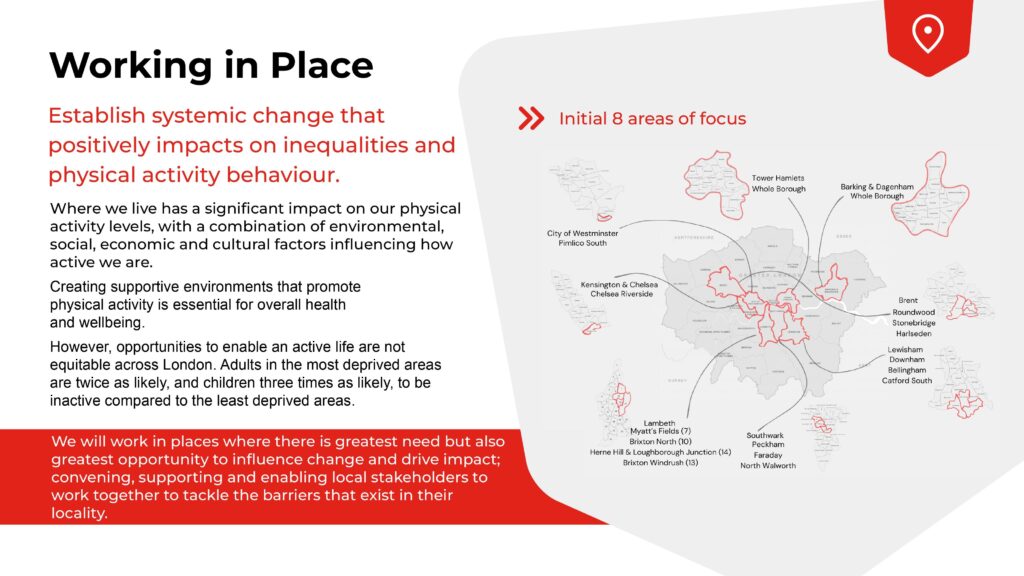
8 Priority Places
We have identified eight initial places of focus where we hope to establish systematic change that positively impacts inequalities and physical activity behaviour. We will work in places where there is greatest need but also greatest opportunity to influence change and drive impact; convening, supporting and enabling local stakeholders to work together to tackle the barriers that exist in their locality.
Why We Are Needed
We do this by gathering, storing and analysing data to enable us to build robust evidence and provide recommendations to help improve the overall quality of decision making.
We build intelligence and insight by using various research approaches, such as:
- Delivering primary and secondary mixed methods research, and data visualisation
- Co-creating research projects with partners that are mutually beneficial
- Commissioning research from key research agencies, e.g. the East London Women and Physical Activity research
- Developing thought leadership pieces to influence and advocate, e.g. ‘Exploring the value of swimming and public pools’
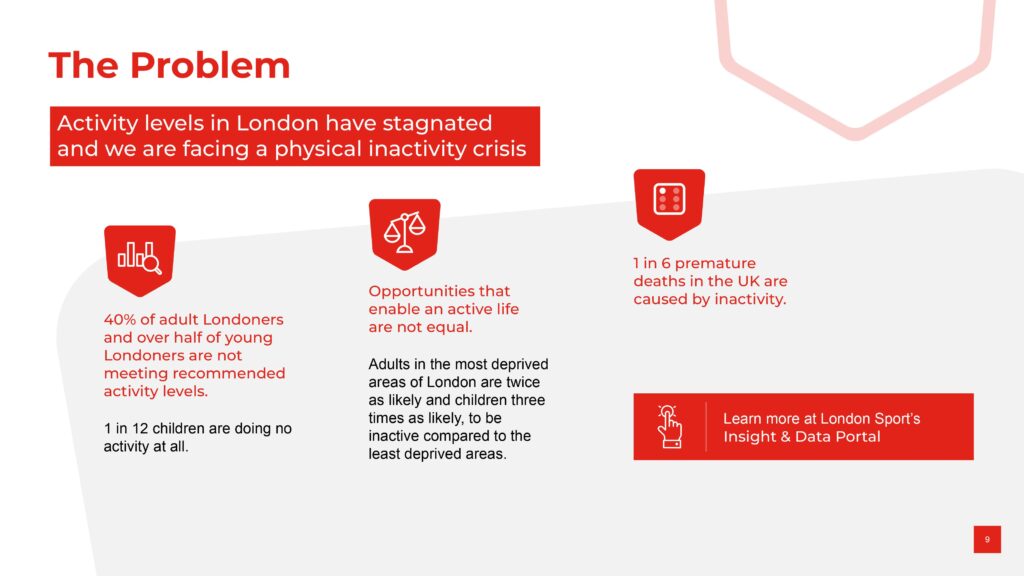
The Problem
Individual and systemic barriers are putting those in deprived communities at a disadvantage.
- There are many barriers Londoners face to becoming active and these vary for individuals and groups.
- They can be a result of individual experience, such as a bad experience of sport at school or a lack of confidence, or from social norms or a fear of judgement through to environmental factors such as a lack of affordable access to facilities.
- These barriers disproportionately affect the most disadvantaged and these people are most likely to experience multiple barriers.
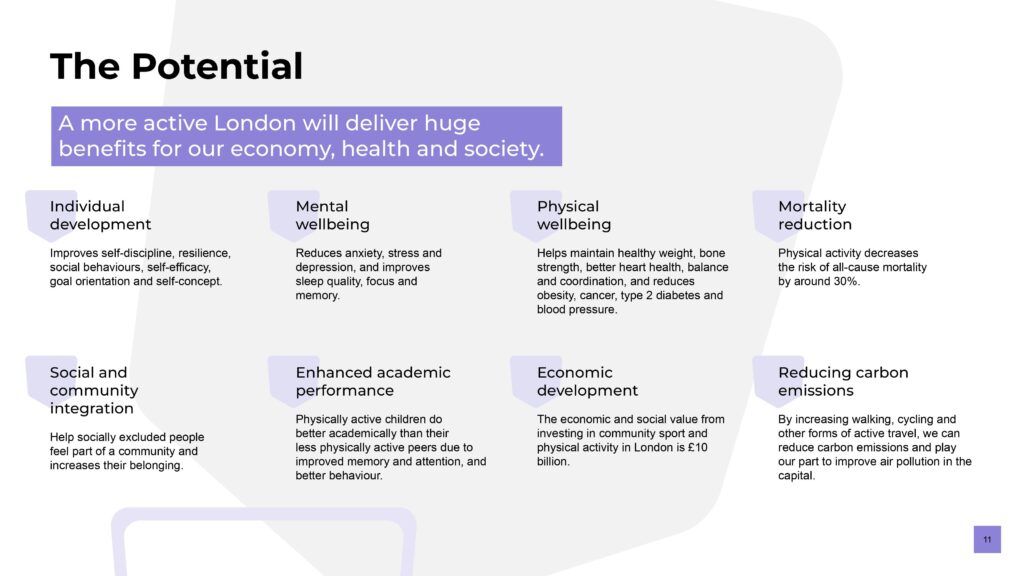
The Potential
We help communities reap the benefits of an active life.